


Twist Bending Mold
JPMX-303ESK / JPMX-503ESK / JPMX-803ESK
JPMX-303CSK / JPMX-303SK
JPMX-303DM / JPMX-303CM
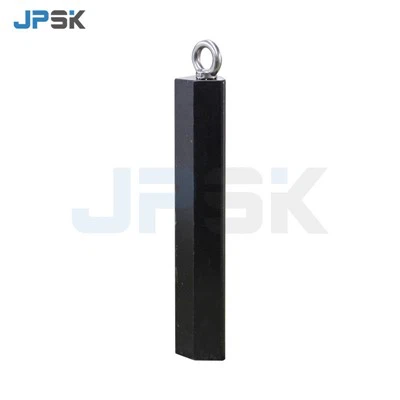
The Twist Bending Mold is a high-precision mold for processing metal or plastic parts with special twisted shapes. It is mainly used to manufacture various parts with complex twist curves and bending angles, and is widely used in aerospace, automobiles, home appliances, industrial equipment and other fields.
Features
High-precision molding capability
Our products use precision machining technology, and the dimensional error of the inner surface of the mold is controlled within ±0.05mm. Its precision machining process ensures that the size and shape of the product remain consistent under high-load and high-speed production environments. This high-precision molding capability can ensure that every part produced meets strict quality standards, reducing the need for post-processing and trimming, and greatly improving production efficiency.
Rapid cooling system
Our molds are designed with an efficient cooling system, which can quickly reduce the temperature after mold molding and shorten the production cycle. The optimization of the cooling system reduces the cooling time of each molding by 30%-40%, thereby improving production efficiency. Rapid cooling can not only improve the production rhythm, but also reduce the risk of thermal deformation of materials and ensure the stability of product quality.
Flexible application range
The Twist Bending Mold are suitable for molding of different materials, including metals, plastics and composite materials. Whether it is high-strength alloys, lightweight aluminum alloys, or plastics with complex fluidity, the mold can perform precise twisting and bending molding according to the characteristics of different materials. In addition, the mold design is highly customizable, and the twist angle and bending radius can be flexibly adjusted according to customer needs, further broadening its application areas and meeting the production needs of complex parts in different industries.
Excellent high load-bearing capacity
Our mold design has a strong load-bearing capacity and can withstand pressures of more than 50 tons. Such load-bearing capacity enables it to be used for high-strength molding needs in large-scale production. Whether in a continuous production environment or when producing large or high-strength parts, the mold can operate stably to ensure the precision and efficiency of mass production.
Production Process
1. Demand Analysis and Design Phase
The first step in making a twist bending mold is to design the mold according to the specific needs of the customer. This phase includes the analysis of the shape, size, material and production process of the product. The design team needs to fully communicate with the customer to understand the specific functions of the parts, the use environment and the twisting angle requirements, and determine the design parameters of the mold. After the design is completed, professional CAD (computer-aided design) software is used for 3D modeling to ensure that all details can be verified in a virtual environment. At this time, key factors such as the cooling system, precision requirements and load-bearing capacity of the mold will also be considered in the design. Through simulation analysis, ensure that the design plan meets the actual needs of production, and conduct preliminary verification of the strength and durability of the mold.
2. Material selection and processing preparation
According to the mold requirements determined by the design plan, selecting the right material is the next key step. Twist bending mold usually uses high-strength alloy steel or other wear-resistant and high-temperature resistant materials to ensure that the mold does not deform during long-term high-load use. When selecting materials, factors such as the mechanical properties, processing properties and wear resistance of the material must be considered. After material selection, enter the processing preparation stage. At this stage, the mold materials need to be cut, welded and pre-processed according to the design drawings to ensure that the dimensions of all raw materials meet the requirements and have good processing performance. This process usually requires the use of high-precision CNC machine tools to ensure the accuracy of subsequent processing.
3. Precision machining and molding
Precision machining is the most critical step in the production process of Twist Bending Mold. Through CNC milling machines, grinders and other equipment, the mold is finely cut, punched, polished and other operations. In this process, each step of processing must be strictly carried out in accordance with the design drawings to ensure that the size and shape of the mold meet the precision requirements. In order to ensure the durability and stability of the mold, special attention should be paid to the smoothness and dimensional accuracy of the inner surface of the mold during processing, and the error is usually controlled within ±0.05mm. After completing basic mechanical processing, the key components of the mold need to be further heat treated to improve their hardness and wear resistance.
4. Cooling system and surface treatment
In order to ensure the stability of Twist Bending Mold in efficient production, the design and installation of the cooling system are crucial. At this stage, the cooling channels and pipes need to be precisely arranged according to the shape of the mold to ensure that each area can be evenly cooled to avoid material deformation or unstable quality caused by excessive temperature difference during the molding process. In addition, the mold surface needs to undergo special surface treatment processes, such as chrome plating, sandblasting, etc., to enhance the corrosion resistance and wear resistance of the mold. This not only helps to extend the service life of the mold, but also maintains a high molding accuracy in production.
5. Assembly and debugging
After completing the main processing, Twist Bending Mold enters the final assembly and debugging stage. In this process, all parts need to be accurately combined according to the design plan, and each functional component of the mold is debugged to ensure the normal operation of the cooling system, clamping mechanism and other mechanical parts. During the debugging process, the technicians will conduct a series of quality inspections to ensure that the mold can achieve the expected effect in actual production.
6. Quality inspection and testing
Each set of completed Twist Bending Mold needs to undergo strict quality inspection and testing. First, the appearance, dimensional accuracy, surface finish and other aspects of the mold are checked to ensure that it meets the design requirements. Then, actual trial mold operations are carried out to simulate the use in the production environment and check the performance of the mold under conditions such as load and temperature changes.
Applicable Models
JPMX-303ESK / JPMX-503ESK / JPMX-803ESK
JPMX-303CSK / JPMX-303SK
JPMX-303DM / JPMX-303CM

Hot Tags: twist bending mold, China twist bending mold manufacturers, factory, tube press brake tool, manual bending die, adjustable forming mold, precision forming mold for pipes, high quality bending mold, press tool for multi angle bending
Previous
U-Shape Bending MoldYou Might Also Like




Send Inquiry