

Hey there! As a supplier of busbar machines, I often get asked about the dimensions of a typical busbar machine. In this blog, I'll break down these dimensions, why they matter, and how they can impact your operations.
Let's start with the basics. The dimensions of a busbar machine are crucial because they determine where you can place the machine in your workspace, how it fits into your production line, and even how easily you can move it around if needed. A machine that's too big might not fit in your available space, while one that's too small might not have the capacity to handle your production requirements.
Overall Size
The overall size of a busbar machine usually includes its length, width, and height. For a typical medium - sized busbar machine, the length can range from about 1.5 meters to 3 meters. This length is important as it affects how much floor space the machine will occupy. If you have a limited production area, a shorter machine would be more suitable.
The width of a busbar machine typically falls between 0.8 meters and 1.5 meters. A wider machine might offer more stability and space for additional features or larger workpieces, but it also takes up more floor space.
The height of these machines can vary from 1.2 meters to 2 meters. A taller machine might have more vertical space for components or a larger working area, but it could also pose challenges if you have a low - ceilinged workspace.
Working Area Dimensions
The working area of a busbar machine is where all the action happens. This is the space where the busbars are processed, whether it's cutting, punching, or bending. The length of the working area can be anywhere from 0.5 meters to 2 meters. A longer working area allows you to process longer busbars without having to re - position them multiple times, which can increase efficiency.
The width of the working area is usually between 0.2 meters and 0.8 meters. A wider working area can accommodate wider busbars, which is important if you're working with different sizes of busbars in your production.
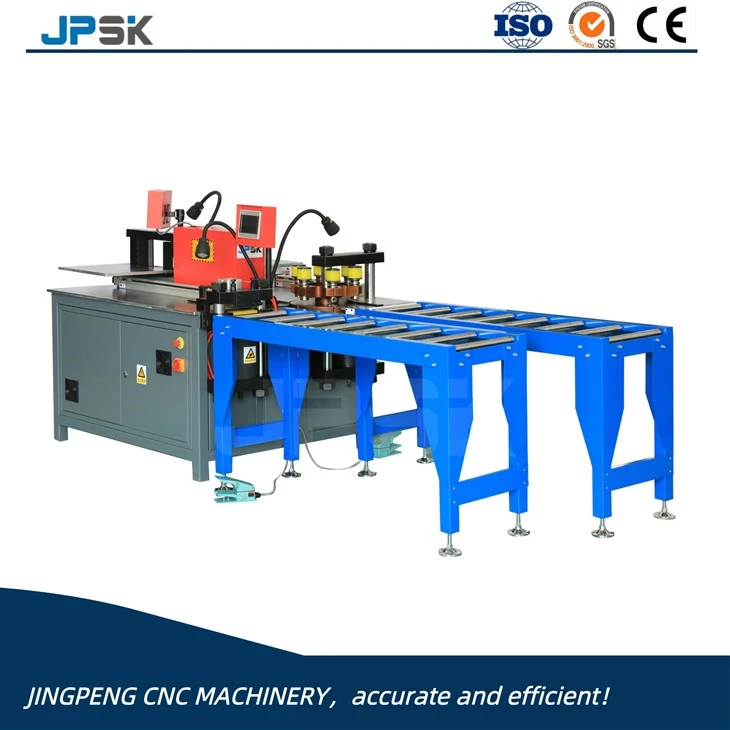
Material Handling Dimensions
Another important aspect is the dimensions related to material handling. This includes the size of the input and output areas for the busbars. The input area needs to be large enough to hold the raw busbar material, which can come in various lengths and widths. A good input area should be able to handle busbars up to 6 meters in length and 200 mm in width for a standard machine.
The output area should be large enough to collect the processed busbars. It should also be designed in a way that allows for easy removal of the finished products. A typical output area might be around 1 meter in length and 0.5 meters in width.
Mobility Dimensions
If you need to move the busbar machine around your facility or even transport it to different locations, the mobility dimensions are important. The weight of the machine is a key factor here. A typical busbar machine can weigh anywhere from 500 kg to 3000 kg. A heavier machine might be more stable during operation but can be more difficult to move.
The dimensions for wheels or casters, if the machine is mobile, also matter. The diameter of the wheels can range from 100 mm to 300 mm, and they need to be strong enough to support the weight of the machine.
Why These Dimensions Matter
Understanding these dimensions is essential for several reasons. Firstly, it helps you plan your workspace effectively. You can ensure that you have enough room for the machine, as well as for operators to move around safely.
Secondly, it impacts the efficiency of your production. A machine with the right dimensions for your busbar sizes can process them more quickly and accurately, reducing production time and waste.
Finally, it affects the cost - effectiveness of your investment. If you choose a machine with dimensions that don't match your needs, you might end up with a machine that's either too big and expensive for your requirements or too small to handle your production volume.
Our High - Precision Busbar Processing Machine
At our company, we offer a High Precision Busbar Processing Machine that's designed with optimal dimensions in mind. Our machine has a compact yet efficient design, with a working area that can handle a wide range of busbar sizes. The overall dimensions are carefully calculated to ensure that it can fit into most standard production facilities.
The input and output areas are designed for easy material handling, and the mobility features make it easy to move the machine around if needed. Whether you're a small - scale manufacturer or a large industrial plant, our machine can be a great addition to your production line.
Contact Us for More Information
If you're in the market for a busbar machine and want to learn more about how the dimensions can impact your operations, or if you have any specific requirements for your production, don't hesitate to reach out. We're here to help you choose the right machine for your needs. You can start a conversation with us to discuss your options and get a quote. We'll work with you to ensure that you get a busbar machine that fits your workspace, production volume, and budget.
References
- Industry standards for busbar machines
- Internal product documentation from our company
So, there you have it! I hope this blog has given you a better understanding of the dimensions of a typical busbar machine and why they're so important. If you have any questions or comments, feel free to leave them below.


