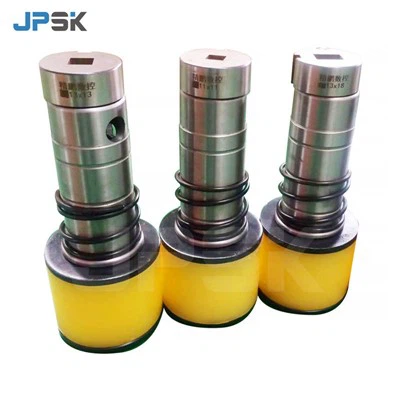
Hey there! As a bending molds supplier, I've seen firsthand how the bending speed can have a huge impact on these molds. In this blog, I'm gonna break down the effects of bending speed on bending molds, and share some insights that I've gathered over the years in the business.
Wear and Tear
One of the most obvious effects of bending speed is on the wear and tear of the bending molds. When you're bending materials at a high speed, there's a lot more friction and stress placed on the mold. This can lead to faster wear of the mold surface. For example, if you're using a Twist Bending Mold to bend busbars at a very high speed, the constant rubbing and pressure can cause the mold's edges to become dull and its surface to get scratched.
Over time, this wear can affect the accuracy of the bending process. A worn - out mold may not be able to bend the material to the precise angle or shape that you need. This means you might end up with products that don't meet the required specifications, which can be a real headache for your customers.

On the other hand, if the bending speed is too slow, it might seem like there's less stress on the mold. But in reality, slow bending can also cause problems. The prolonged contact between the material and the mold can lead to a build - up of heat, which can soften the mold material and also cause chemical reactions on its surface. This can still lead to premature wear of the mold.

Material Flow
The bending speed also affects how the material flows during the bending process. When you bend at a high speed, the material has less time to adjust to the change in shape. This can cause uneven material flow, which may result in defects such as cracks or wrinkles in the bent product.
Let's say you're using an Embossing Mold to add some patterns to a metal sheet. If the bending speed is too high, the material might not flow smoothly around the embossing features. This could lead to incomplete embossing or even damage to the mold if the material tries to force its way through the mold too quickly.
Conversely, a very slow bending speed allows the material to flow more evenly. However, it also means that the production process will take much longer. This can increase your production costs and reduce your overall efficiency. You need to find that sweet spot where the material flows well without sacrificing too much time.
Heat Generation
Bending at high speeds generates a significant amount of heat. This heat can have a major impact on the bending molds. The high temperature can cause the mold material to expand, which can change its dimensions. If the expansion is not uniform, it can lead to distortion of the mold.
For instance, when using a One - Time Forming Bending Mold, any distortion in the mold can prevent it from forming the material into the correct shape in one go. This can result in additional processing steps or even scrap parts.
Moreover, the heat can also affect the hardness of the mold material. Prolonged exposure to high temperatures can cause the mold to lose its hardness, making it more susceptible to wear and deformation. To counteract this, you might need to use cooling systems or special heat - resistant mold materials. But these solutions can add to the cost of production.
Product Quality
Ultimately, the bending speed affects the quality of the final product. As I mentioned earlier, high - speed bending can lead to uneven material flow, cracks, and other defects. These issues can compromise the structural integrity and the aesthetic appeal of the product.
If you're producing parts for a high - end application, like in the aerospace or automotive industries, even the slightest defect can be a deal - breaker. Your customers expect products that are precise and of the highest quality. So, getting the bending speed right is crucial for maintaining your reputation as a reliable supplier.
On the other hand, slow bending can also affect product quality. The longer processing time can expose the material to more environmental factors, such as oxidation or contamination. This can also lead to a decrease in the quality of the final product.
Finding the Optimal Bending Speed
So, how do you find the optimal bending speed for your bending molds? Well, it depends on several factors. First, you need to consider the type of material you're bending. Different materials have different properties, such as ductility and hardness. For example, softer materials like aluminum can generally be bent at a higher speed compared to harder materials like stainless steel.

The thickness of the material also plays a role. Thicker materials usually require a slower bending speed to ensure proper material flow and to prevent cracking. You also need to take into account the design of the bending mold. Some molds are more suitable for high - speed bending, while others work better at a slower pace.
It's also a good idea to conduct some tests. Start with a moderate bending speed and gradually adjust it up or down while closely monitoring the quality of the bent products and the condition of the mold. Keep detailed records of your tests so that you can analyze the results and find the best speed for your specific application.
Conclusion
In conclusion, the bending speed has a wide range of effects on bending molds, from wear and tear to product quality. As a bending molds supplier, I understand how important it is to find the right balance. By carefully considering the material, the mold design, and conducting thorough testing, you can optimize the bending speed and get the most out of your bending molds.
If you're in the market for high - quality bending molds or have any questions about bending speed and its effects, don't hesitate to reach out. We're here to help you make the best decisions for your production process and ensure that you get the best results. Let's start a conversation and see how we can work together to improve your manufacturing operations.
References
- "Metal Forming Handbook: Processes and Applications"
- "Bending and Forming of Sheet Metal"
- Industry reports on bending mold technology and best practices