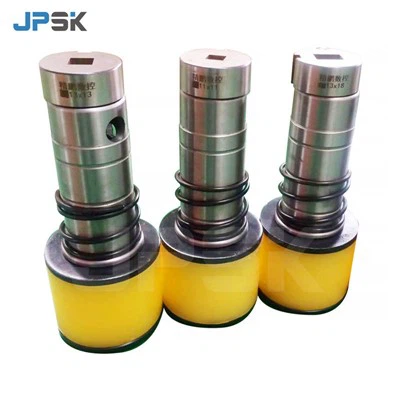
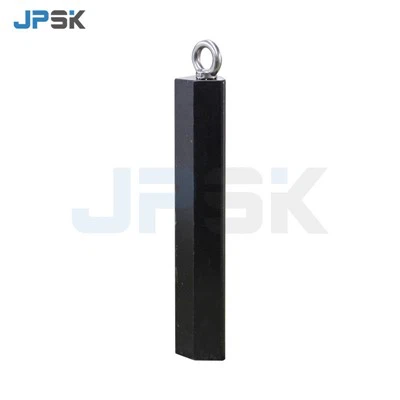
Hey there! As a supplier of seamless bending molds, I've been in the business long enough to know that surface treatment is a big deal. It's not just about making the mold look good; it's about improving its performance, durability, and overall lifespan. So, I'm gonna share some of the common surface treatment methods for seamless bending molds with you.
Nitriding
Nitriding is one of the most popular surface treatment methods for seamless bending molds. It involves introducing nitrogen into the surface of the mold to form a hard, wear - resistant nitride layer. This process can significantly improve the hardness, abrasion resistance, and corrosion resistance of the mold.
There are several types of nitriding, such as gas nitriding, ion nitriding, and salt - bath nitriding. Gas nitriding is a widely used method. In this process, the mold is heated in a nitrogen - rich gas atmosphere. The nitrogen atoms diffuse into the surface of the mold, reacting with the metal to form nitrides. Ion nitriding, on the other hand, uses a plasma discharge to accelerate the nitrogen ions towards the mold surface. This method offers better control over the nitriding process and can produce a more uniform nitride layer.
One of the big advantages of nitriding is that it can be done at relatively low temperatures, which helps to minimize distortion of the mold. This is crucial because even a small amount of distortion can affect the accuracy of the bending process. If you're interested in our molds treated with nitriding, you can check out our Seamless Bending Mold.
Chrome Plating
Chrome plating is another well - known surface treatment option. It adds a thin layer of chromium to the surface of the seamless bending mold. Chrome plated molds have excellent corrosion resistance, smooth surface finish, and good wear resistance.
The process of chrome plating involves immersing the mold in a chromic acid - based electrolyte solution and passing an electric current through it. The chromium ions in the solution are deposited onto the mold surface, forming a hard, shiny layer.
One of the benefits of chrome plating is that it can also improve the release properties of the mold. This means that the bent material is less likely to stick to the mold during the bending process, which can increase the efficiency of production and reduce the risk of damage to the mold. We offer chrome - plated One - Time Forming Bending Mold that can meet your specific needs.


Heat Treatment
Although heat treatment is not strictly a surface - only treatment, it can have a significant impact on the surface properties of a seamless bending mold. Heat treatment involves heating the mold to a specific temperature and then cooling it at a controlled rate. This process can change the microstructure of the metal, improving its strength, hardness, and toughness.
For example, quenching and tempering are common heat - treatment processes. Quenching involves rapidly cooling the heated mold, which makes the metal harder. However, quenched metal can be brittle, so tempering is often done after quenching. Tempering involves heating the quenched mold to a lower temperature and holding it there for a period of time. This reduces the brittleness while still maintaining a high level of hardness.
Proper heat treatment can enhance the overall performance of the mold and also make it more resistant to surface damage during the bending process. If you want a mold that has undergone high - quality heat treatment, our Twist Bending Mold is a great choice.
Coating
Applying a special coating to the surface of the seamless bending mold is also an effective surface treatment method. There are different types of coatings available, such as ceramic coatings, PVD (Physical Vapor Deposition) coatings, and DLC (Diamond - Like Carbon) coatings.
Ceramic coatings are known for their high hardness, wear resistance, and thermal stability. They can protect the mold surface from high - temperature damage and abrasive wear. PVD coatings are deposited in a vacuum chamber by vaporizing a solid coating material and then depositing it onto the mold surface. These coatings can provide excellent adhesion and a wide range of properties, depending on the coating material used. DLC coatings have properties similar to diamond, such as high hardness, low friction coefficient, and good chemical stability.
Coatings can be tailored to specific requirements. For example, if you need a mold that can withstand high - speed bending operations, a low - friction coating might be the way to go. We can provide seamless bending molds with various coatings to suit your production needs.
Shot Peening
Shot peening is a mechanical surface treatment method. It involves bombarding the surface of the mold with small spherical shot (usually made of steel, glass, or ceramic). The impact of the shot on the surface causes plastic deformation, which creates compressive stresses on the surface of the mold.
These compressive stresses can improve the fatigue resistance of the mold. Fatigue failure is a common problem in bending molds, especially when they are subjected to repeated loading. By inducing compressive stresses, shot peening can prevent crack initiation and propagation on the mold surface, thus extending the mold's lifespan.
Shot peening can also improve the surface roughness of the mold to some extent. A proper surface roughness can help in the lubrication of the bending process and reduce the friction between the mold and the bent material.
Choosing the Right Surface Treatment
So, how do you choose the right surface treatment for your seamless bending mold? Well, it depends on several factors. First, consider the type of material you'll be bending. Different materials have different hardness, ductility, and abrasiveness. For example, if you're bending a very hard and abrasive material, you might want a mold with a hard - coating or nitriding treatment.
The production volume is another important factor. If you're running a high - volume production line, you need a mold that can withstand frequent use without wear or damage. In this case, a more durable surface treatment like chrome plating or PVD coating might be suitable.
The precision requirements of the bending process also matter. Some surface treatments can affect the dimensional accuracy of the mold. For example, heat treatment can cause some distortion, although the distortion can be minimized through proper control. So, if you need high - precision bending, you need to choose a surface treatment that won't compromise the accuracy.
Wrapping Up
In conclusion, surface treatment is a crucial part of the seamless bending mold manufacturing process. Each method has its own advantages and is suitable for different applications. Whether it's nitriding for wear resistance, chrome plating for corrosion protection and smoothness, heat treatment for overall strength improvement, coating for tailored properties, or shot peening for fatigue resistance, choosing the right surface treatment can make a big difference in the performance and lifespan of your mold.
If you're in the market for high - quality seamless bending molds with the best - suited surface treatments, don't hesitate to reach out. We're here to help you find the perfect solution for your bending needs. Let's have a chat and discuss how we can work together to improve your production process.
References
- ASM Handbook Volume 5: Surface Engineering.
- Metals Handbook Desk Edition, 3rd Edition.
- "Surface Treatment Technologies for Tooling" by various industry experts.